
Manish Tiwary plans to take up a new role at another firm.

The platform recorded a peak rate of 917 filings per second on July 17 and 9,367 filings per minute on July 31.
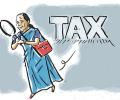
The income-tax (I-T) department has started scrutinising cases for the assessment year (AY) 2018-19 to determine which of them need to be reopened, a process that might result in a raft of tax notices. This follows this year's Union Budget move to reduce the time limit for tax reassessment from 10 years to five in cases of escaped income. The new provision becomes effective on September 1 and will make past assessments for AY 2018-19 time-barred.

'We have now drastically simplified it, primarily to two rates in long-term capital gains: 20% and the applicable rates. Similarly, in short-term capital gains.' 'For listed shares, there is a slight increase, but for unlisted shares, where indexation benefits are removed, there is a reduction in rates, benefiting unlisted companies, venture capital firms, etc.' 'Similarly, in real estate, wherever returns are higher, the new structure is beneficial. In very few cases, returns are lower, and those are more of an exception.'

'I found it unbelievable that L&T said 45,000 jobs were waiting to be filled because of unavailability of suitable skillsets.' 'So, when the Opposition sweepingly says there are no jobs, I'm sorry... I'm not saying it's raining jobs, but there are jobs. The (skill) gap has to be bridged.'

The finance minister continues to be backed by the same policy team in charting out the broad strategy as in the few earlier Budgets.

Edtech company Byju's parent Think & Learn will challenge the National Company Law Tribunal's (NCLT's) order on insolvency proceedings and may approach the National Company Law Appellate Tribunal (NCLAT) in the next few days, a source claimed. With the NCLT appointing Pankaj Srivastava as the interim resolution professional (IRP), time is running out for Byju's as the committee of creditors (CoC) begins to be formed.

Developers in India now have expanded access to Google's powerful AI models with the 2 million token context window in Gemini 1.5 Pro and Gemma 2, the next generation of open models.

Ola Electric, the SoftBank-backed electric vehicle (EV) maker, is likely to pursue a valuation of approximately $4.5 billion in its upcoming initial public offering (IPO), marking about 18 per cent decrease from its last funding round valuation of around $5.5 billion, according to industry sources. The Bhavish Aggarwal-founded firm aims to file for the IPO by next month, according to people familiar with the matter. "The strategy is to price the IPO attractively for investors, fostering long-term growth and wealth creation," said a source.

A group comprising top tech startups and unicorns has raised several "serious concerns" over a platform-based gig workers Bill proposed by the Karnataka government, saying it would hurt the ease of doing business. They told the state government the Bill in its current form would hamper operations and increase regulatory and compliance burden on the nascent gig and startup economy, according to sources.

Bhavish Aggarwal, founder and chief executive officer of Ola, is encouraging developers to switch from Google Maps to Ola Maps. Ola is offering developers a year of free access to Ola Maps on the company's Krutrim Cloud and over Rs 100 crore in free credits. This initiative comes after Ola replaced Google Maps with its own Ola Maps, leading to annual savings of around Rs 100 crore.

Edtech firm Unacademy has laid off 250 people across verticals, according to people familiar with the matter, reducing its employee strength by 50 per cent from what it was two years ago. Of those, 100 are from core functions such as marketing, business, and product, while the rest are from sales.

In March 2021, Ola Electric founder Bhavish Aggarwal was seen surveying an empty 500-acre land surrounded by shoe factories, temples, bakery shops, coconut trees and dusty roads in Pochampalli town of Krishnagiri district, Tamil Nadu. Many excavators and workers were busy at the construction site to build the Ola Futurefactory for electric vehicles.
Byju Raveendran, the founder of the beleaguered ed-tech firm Byju's, put himself on a pedestal and stopped listening to anyone, said Gaurav Munjal, the chief executive officer of edtech firm Unacademy. Munjal highlighted the importance of 'blunt feedback'. In a post on X, he alleged that Byju's founder stopped listening and failed to have people who could give him the right feedback.
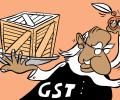
In a relief for foreign firms giving loans to Indian subsidiaries, tax authorities have said goods and services tax (GST) will not be imposed on them, subject to some caveats. Additional fees, commissions, or related payments - over and above the amount charged as interest - on these loans will attract GST at 18 per cent, the Central Board of Indirect Taxes and Customs (CBIC) has said.

Amid the Budget preparation, the revenue department is assessing the feasibility of further adjustments to maximise benefits for salaried individuals.

'Any finality in such matters requires political views. We will review it closer to the full Budget.'

Beleaguered edtech firm Byju's has moved the Karnataka high court challenging the order of the National Company Law Tribunal (NCLT) restraining it from going ahead with the second rights issue. The plea is likely to come up for hearing on Monday. The orders of NCLT were expected to be challenged before the National Company Law Appellate Tribunal (NCLAT).
The Goods and Services Tax (GST) Council, scheduled to meet on June 22, could take a call on ending uncertainty on taxing foreign airlines and shippers as regards certain services, a senior official in the know told Business Standard. He said the Council was expected to decide on exempting the services in question from GST - aircraft lease rentals, maintenance, crew salaries, etc. These services are provided by foreign airlines to their Indian operations.

Fresh plans of privatisation or divestment in central public sector enterprises and public sector banks might take a back seat this financial year because these may require a large consensus among coalition partners.
 © 2026 Rediff.com - Investor Information - Advertise with us - Disclaimer - Privacy Policy - Sitemap - Feedback - About us - Terms of use - Grievances